
A successful block paving installation starts beneath the surface. While the paving blocks determine the finished appearance, the underlying foundation provides the stability needed to withstand regular foot traffic, vehicle weight and changing weather conditions.
Whether installing a new driveway, patio or garden pathway, calculating the correct quantities of aggregate and bedding sand is essential. Too little material can compromise the finished surface, while ordering considerably more than necessary can increase project costs and create avoidable waste.
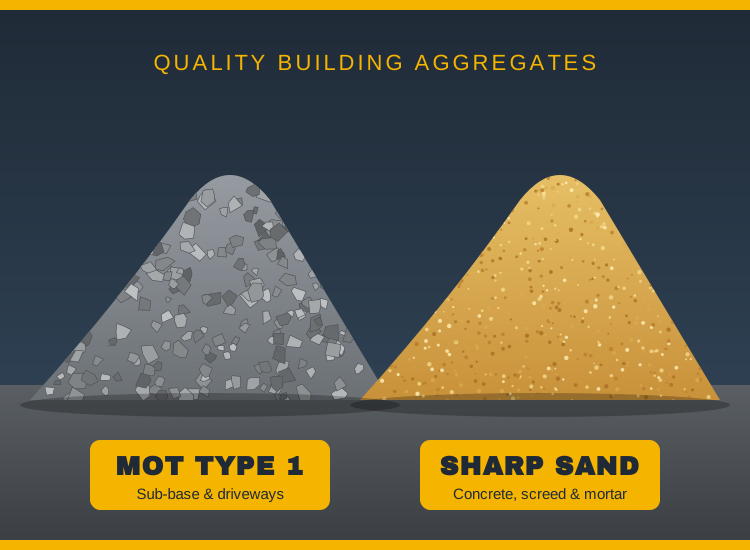
When planning a Standard Block Paving installation, two materials are particularly important: MOT Type 1 aggregate and sharp sand. Builders merchants such as William Hercock can help homeowners and contractors source suitable materials for groundwork and paving projects.
Understanding the purpose, depth and quantity of each layer will help you prepare an accurate materials list before work begins.
Understanding the Layers Beneath Block Paving
Block paving is constructed using several layers, each serving a distinct structural purpose. Getting the proportions right is essential for a stable, level and durable finish.
A typical installation consists of:
- Subgrade: The existing soil or ground beneath the installation.
- Sub-base: A compacted layer of MOT Type 1 aggregate that distributes loads and provides structural support.
- Bedding layer: A layer of sharp or grit sand that creates an even surface for laying the blocks.
- Paving blocks: The visible surface, arranged in the chosen pattern.
- Jointing material: Kiln-dried jointing sand brushed into the gaps to help lock the blocks together.
Each layer contributes to the overall performance of the paving. If the sub-base is inadequately prepared, even high-quality blocks can become uneven, sink or develop depressions over time.
What Is MOT Type 1 and Why Is It Used?
MOT Type 1 is a graded aggregate commonly used for roads, driveways, paths, and other construction projects requiring a stable sub-base.
It typically contains crushed stone, gravel and smaller particles, allowing the material to compact into a dense, interlocking layer.
Its main benefits include:
- Excellent load distribution.
- Good structural stability.
- Resistance to movement when properly compacted.
- A relatively consistent, level foundation.
- Suitability for a wide range of external groundwork projects.
When compacted correctly, the different aggregate sizes bind together to create a firm foundation.
For domestic block paving, MOT Type 1 is commonly used because it provides the necessary support for pedestrian and vehicle traffic when installed at an appropriate depth.
What Is Sharp Sand and What Role Does It Play?
Sharp sand, sometimes referred to as grit sand, is a coarse-grained aggregate commonly used in construction and paving applications.
Its angular grains provide a relatively stable bedding material compared with finer building sand.
In block paving, the bedding layer creates a consistent surface on which individual blocks can be positioned accurately.
It also helps accommodate minor variations in block thickness and supports the paving units evenly.
A few important considerations include:
- Use suitable coarse bedding sand recommended for block paving.
- Avoid using soft building sand as a substitute.
- Ensure the bedding layer is evenly screeded.
- Do not use the bedding sand to compensate for an uneven sub-base.
The bedding layer should remain relatively thin and consistent. Excessively thick sand can contribute to settlement and uneven paving.
How Deep Should a Block Paving Sub-Base Be?
The required sub-base depth depends on the intended use of the paved area, the condition of the existing ground and the expected loading.
Typical starting points for domestic installations are:
| Application | Typical compacted sub-base depth |
| Garden paths | 75–100mm |
| Residential patios | 75–100mm |
| Domestic driveways | 100–150mm |
| Heavier vehicle areas | 150mm or more, subject to design |
These are indicative depths rather than universal specifications. Weak, clay-rich or poorly drained ground may require additional excavation and a deeper engineered foundation.
It is also important to distinguish between compacted and loose aggregate depth.
For example, if your finished sub-base needs to be 100mm deep, you must allow for the reduction in depth that occurs when the aggregate is compacted using a vibrating plate.
Calculating How Much MOT Type 1 You Need
Working out the quantity of MOT Type 1 involves three measurements:
- Length of the paved area.
- Width of the paved area.
- Required compacted sub-base depth.
The basic formula is:
Length × Width × Depth = Volume in cubic metres
Remember to convert millimetres into metres before calculating.
For example, consider a driveway measuring 10m long and 5m wide, with a required compacted sub-base depth of 150mm.
The calculation is:
10 × 5 × 0.15 = 7.5m³
This means the finished compacted sub-base will occupy 7.5 cubic metres.
However, this is not necessarily the quantity you should order. Loose aggregate takes up more space before compaction, and the precise conversion depends on its grading, moisture content and density.
As a preliminary estimate, you might allow approximately 2 tonnes of MOT Type 1 per cubic metre of compacted sub-base, although supplier data should take precedence.
For this driveway:
7.5 × 2 = 15 tonnes.
Allowing an additional 5–10% for handling, variations and wastage gives an estimated order of approximately 15.75–16.5 tonnes.
For larger projects, ask your supplier to confirm the appropriate loose-volume and weight conversion.
Working Out the Quantity of Sharp Sand Required
The quantity of bedding sand is calculated using the same area-and-depth method.
However, the bedding layer is considerably thinner than the sub-base.
For many conventional block paving installations, a bedding layer of approximately 30–50mm is used before the blocks are compacted. Always follow the paving manufacturer’s installation specification.
Using the previous 10m × 5m driveway example, assume a bedding layer of 40mm.
The calculation is:
10 × 5 × 0.04 = 2m³
You would therefore need approximately 2 cubic metres of bedding sand before allowing for any additional material requirements.
The final quantity in tonnes depends on the sand’s bulk density and moisture content. Ask your builders merchant for the product’s conversion information when ordering.
Avoid ordering by volume alone if the supplier sells the material by weight.
A Practical Block Paving Material Calculation
The following example brings the calculations together for a typical residential driveway.
ILLUSTRATIVE PROJECT
10m × 5m driveway
50m² total paving area
MOT Type 1
15–16.5 tonnes
Based on a 150mm compacted sub-base and an indicative allowance of 5–10%.
Sharp sand
2m³
Based on a 40mm bedding layer, before any additional ordering allowance.
Paving area
50m²
These figures provide a useful starting point for estimating material requirements. Actual quantities should be adjusted for ground conditions, compaction, product density and the installation specification.
How to Account for Compaction and Material Wastage
One of the most common calculation errors is ordering aggregate based solely on the finished sub-base volume.
MOT Type 1 compacts as the particles settle and interlock under mechanical pressure. Consequently, the loose material occupies more volume than the finished compacted layer.
A sensible allowance should account for:
- Compaction during installation.
- Uneven excavation depths.
- Minor variations in ground levels.
- Material lost during transportation and handling.
- Small areas requiring additional filling.
An allowance of around 5–10% can be useful for preliminary estimating, but it should not replace a proper compaction and density calculation.
Sharp sand also needs sensible ordering allowances, particularly where the ground or screeded bedding layer is irregular.
Does the Sub-Base Depth Change for Driveways and Patios?
Yes. The intended loading has a direct bearing on the required foundation.
A garden patio generally experiences pedestrian loading, lightweight furniture and occasional maintenance equipment. A domestic driveway, by comparison, must withstand repeated vehicle movements and concentrated wheel loads.
For this reason, driveways commonly require a deeper and more substantial sub-base.
Ground conditions matter too. Clay soil, soft ground and areas prone to waterlogging may require additional preparation.
For particularly challenging sites, a geotextile separation membrane may be specified to prevent the underlying soil from contaminating the aggregate sub-base.
The important principle is to design the foundation around the ground and anticipated loading rather than simply following a standard depth for every project.
Preparing the Ground Before Laying the Sub-Base
Good groundwork is fundamental to a successful block paving installation.
Start by marking out the proposed area and establishing the required finished levels. Allow sufficient excavation depth for the sub-base, bedding layer and paving blocks.
Remove topsoil, vegetation, roots and unsuitable material. Organic matter should not remain beneath the foundation because it can decompose and contribute to settlement.
Next, assess the exposed ground for soft spots and areas of poor drainage.
Once the formation is suitable, compact it where appropriate before introducing the aggregate.
MOT Type 1 should generally be laid in manageable layers and compacted using suitable equipment. Deep layers should not simply be compacted in one pass, as this can leave insufficiently consolidated material underneath.
Pay particular attention to falls and drainage. The finished surface should direct water towards an appropriate drainage point rather than allowing it to accumulate against buildings.
Common Mistakes When Calculating Paving Materials
Even relatively straightforward paving projects can encounter problems when material quantities are underestimated or incorrectly specified.
Some common mistakes include:
Confusing loose and compacted depths
A 150mm compacted sub-base requires more than 150mm of loose aggregate. Failing to account for compaction can leave the foundation too shallow.
Using the wrong sand
Fine building sand is not an appropriate substitute for suitable coarse bedding sand. The bedding material must provide sufficient stability.
Ignoring ground conditions
Soft or unstable ground may require additional excavation, aggregate or ground reinforcement.
Making inaccurate measurements
Irregularly shaped driveways and patios should be divided into smaller sections, with individual areas calculated and added together.
Overlooking drainage
Even a correctly installed sub-base can experience problems if surface water is not managed effectively.
Taking time to measure accurately and assess the site before ordering can help prevent unnecessary delays and additional delivery costs.
Choosing Quality Materials for a Lasting Installation
The quality and consistency of construction materials have a direct influence on the finished paving.
When purchasing MOT Type 1, check that the aggregate meets the appropriate specification and is suitable for its intended application. Its grading should allow effective compaction and provide a stable foundation.
For bedding sand, choose a suitable coarse material that can be evenly screeded and supports the paving blocks correctly.
It is also worth considering how materials will be delivered and stored. Bulk deliveries can be more economical for larger projects, while smaller bags may be convenient for restricted access or minor repairs.
Working with an established builders merchant such as William Hercock can help you source suitable aggregates, sands and associated construction materials for your project.
Before ordering, confirm the required quantities, product specifications and delivery arrangements to ensure everything is available when groundwork begins.
Conclusion: Getting Your Block Paving Foundations Right
Calculating the correct quantities of MOT Type 1 and sharp sand is an essential part of planning a successful block paving installation.
MOT Type 1 provides the structural foundation, while the bedding sand creates an even surface for positioning the individual paving blocks. Both materials need to be selected and installed correctly.
For a typical 50m² domestic driveway with a 150mm compacted sub-base and a 40mm bedding layer, an initial estimate would be approximately 15–16.5 tonnes of MOT Type 1 and 2m³ of sharp sand.
However, these figures should always be checked against actual site conditions, material specifications and compaction requirements.
Careful measurement, appropriate material selection and thorough ground preparation will help create a stable, attractive paved surface capable of withstanding everyday use for years to come.